
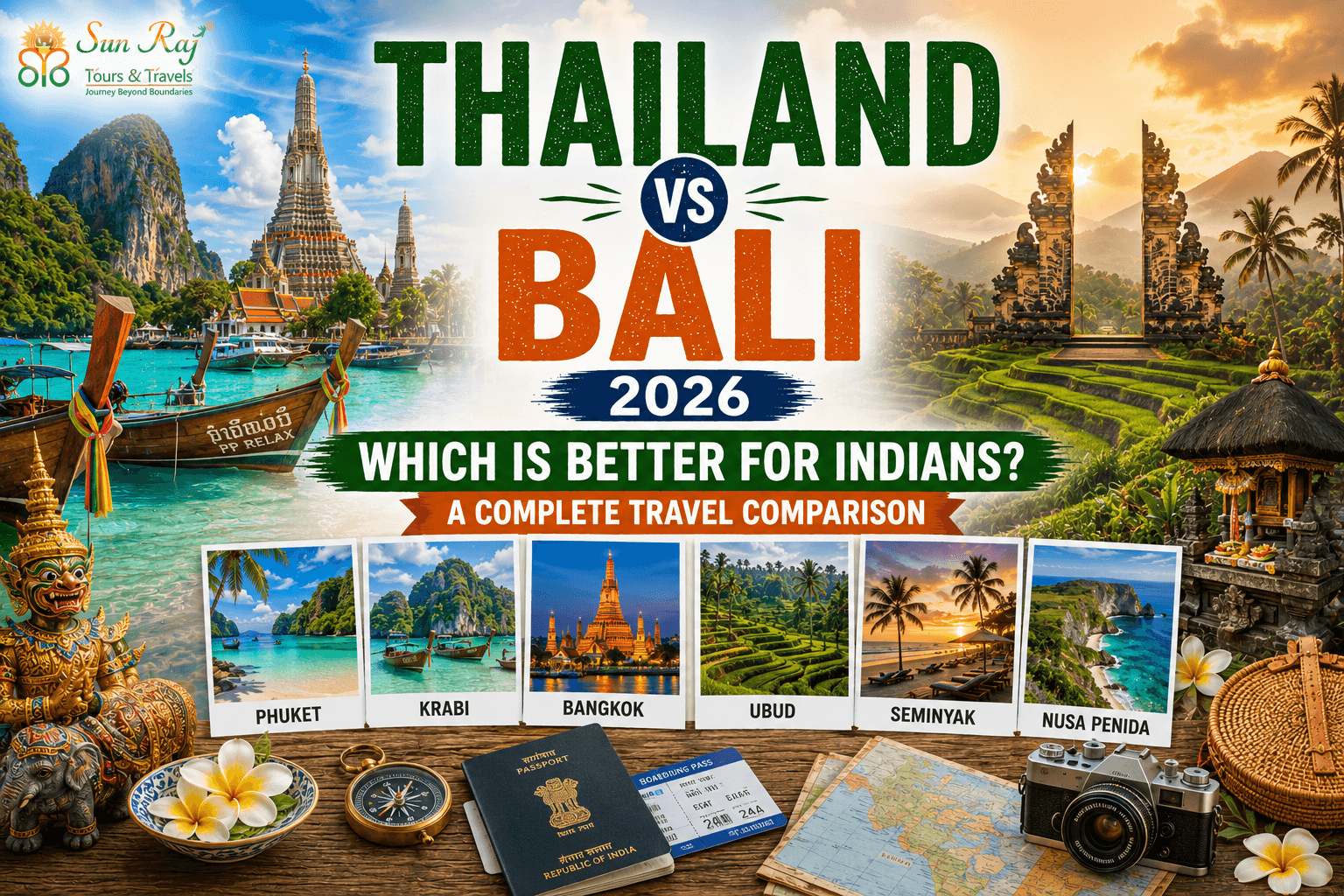
Thailand vs Bali 2026 — Which Is Better for Indians?
Two destinations. One big decision.
You have your annual leave approved. Your passport is ready. And your heart is torn between two of Southeast Asia’s most iconic holiday spots, Thailand and Bali.
Both show up on nearly every Indian traveler’s bucket list. Both promise beaches, culture, great food, and memories worth keeping. But they are very different places, with very different personalities.
So, when it comes to Thailand or Bali, which is better for Indian travelers in 2026, the answer is not as simple as picking a winner. It depends on what you value most.
That is exactly what this guide answers. We break down visa rules, flight costs, daily expenses, beaches, food, nightlife, and the type of traveler each destination suits best. By the end, you will know which one deserves your hard-earned money this year.
Quick Snapshot: Thailand vs Bali 2026
| Category | Thailand | Bali (Indonesia) |
| Visa for Indians | 60-day visa-free entry | Visa on Arrival — USD 35 (~₹2,950) |
| Avg. Flight Cost (Round Trip) | ₹12,000 – ₹20,000 | ₹15,000 – ₹25,000 |
| Daily Budget (Mid-Range) | ₹3,500 – ₹6,000 | ₹4,500 – ₹7,500 |
| Best For | Budget travel, first trips, nightlife | Honeymoon, wellness, culture |
| Vegetarian Food | Moderate | Excellent |
| Beach Quality | Excellent (Phuket, Krabi, Phi Phi) | Good (Nusa Penida, Uluwatu) |
| Trip Duration | 7–10 days | 5–7 days |
1. Visa: Which Is Easier for Indians?
This is where Thailand wins, clearly.
Thailand now offers Indians a 60-day visa-free entry. You walk through immigration with your passport, a return ticket, and a hotel booking. No paperwork. No fees. Most travelers clear immigration in under 15 minutes.
Bali (Indonesia) operates a Visa on Arrival system. It costs USD 35 (roughly ₹2,950). You join a separate VOA queue at Ngurah Rai Airport, pay by card or cash, and receive a 30-day stamp. The process takes around 15–20 minutes. Indonesia also recommends carrying proof of funds (USD 100 per day of stay), though checks are infrequent.
Both options are straightforward. But if ease and zero extra cost matter to you, Thailand takes this round.
2. Flights from India: Connectivity and Cost
Getting to Thailand is faster and cheaper from most Indian cities.
Thailand flights:
- Direct flights from Delhi, Mumbai, Kolkata, Bangalore, and Chennai to Bangkok’s Suvarnabhumi Airport
- Airlines: IndiGo, Air India, Thai Airways, Vistara, Thai AirAsia
- Flight time: 3.5 to 4.5 hours
- Round-trip cost: ₹12,000 – ₹20,000
Phuket and Chiang Mai also have direct international flights from select Indian cities, adding more flexibility for your itinerary.
Bali flights:
- No direct flights from India to Bali currently
- You must connect through Singapore, Kuala Lumpur, or Bangkok
- Total travel time: 8 to 12 hours depending on layover
- Round-trip cost: ₹15,000 – ₹25,000
If you are flying from Mumbai or Delhi, Thailand will likely save you both time and money on airfare alone.
3. Thailand vs Bali Cost: Which Is Lighter on the Pocket?
When asking Thailand or Bali, which is better from a budget perspective, most Indian travelers are really asking about the Thailand vs. Bali cost gap. Here is a realistic breakdown.
A 7-night trip in Thailand (per person, mid-range):
- Flights: ₹15,000
- Hotels: ₹2,500 – ₹4,000 per night
- Food: ₹500 – ₹1,200 per day
- Activities & transport: ₹600 – ₹1,500 per day
- Total estimate: ₹50,000 – ₹65,000
A 7-night trip in Bali (per person, mid-range):
- Flights: ₹20,000
- Hotels/Villas: ₹3,500 – ₹6,000 per night
- Food: ₹700 – ₹1,800 per day
- Activities & transport: ₹800 – ₹1,800 per day
- Total estimate: ₹65,000 – ₹85,000
Thailand is roughly 15–20% cheaper than Bali overall. Street food in Thailand starts at ₹80 per plate. In Bali, the same meal at a local warung costs around ₹200–₹350. Transport in Thailand (shared songthaews, tuk-tuks) is far cheaper than Bali’s private driver system, which is almost mandatory on the island.
That said, Bali offers better value in the luxury villa segment. A private pool villa in Seminyak or Ubud costs far less than a comparable property in, say, Koh Samui or Phuket.
Winner for budget travel: Thailand. Winner for luxury value: Bali.
4. Phuket vs Bali: Beach Showdown
When Indian travelers ask Thailand or Bali, which is better for beaches, most are really comparing Phuket vs. Bali. The Phuket vs. Bali beach debate is worth settling properly.
Phuket beaches: Phuket has over 30 beaches. Patong is the most popular — loud, busy, and full of nightlife. Kata and Karon offer a more relaxed vibe with clear turquoise water. Surin and Nai Harn are quieter, with white sand and stunning scenery.
From Phuket, you can also take a day trip to the Phi Islands, Krabi, and James Bond Island. The Andaman Sea here has excellent water clarity. Snorkeling and scuba diving are world-class.
Best time for Phuket beaches: November to April (dry season)
Bali beaches: Bali’s beaches are mixed. Kuta is crowded, and the waves are rough, better for surfing than swimming. Seminyak is trendy with beach clubs and sunsets. Uluwatu and Padang Padang have dramatic cliff backdrops and are excellent for experienced surfers.
The best beach experience in Bali actually requires a short boat ride to Nusa Penida. Crystal Bay and Kelingking Beach are stunning. But you have to plan for it.
Bali is the better choice if you surf. Phuket wins for swimming, snorkeling, and white-sand, calm-water beach days.
Winner for beach holidays: Phuket. Winner for surfing: Bali.
5. Food: Which Is Better for Indian Palates?
This section matters a lot, especially for vegetarians. And if you are deciding between Thailand and Bali, which is better based purely on food, Bali has a significant edge for Indian travelers.
Thailand: Thai cuisine is rich and flavorful. Pad Thai, Tom Yum soup, mango sticky rice, and Massaman curry are world-famous for good reason. However, fish sauce and oyster sauce sneak into many dishes that appear vegetarian. Street vendors may not always understand strict vegetarian requirements.
The good news: Bangkok has an entire Little India district (Pahurat) with authentic Indian food. Tourist areas like Phuket and Chiang Mai have many restaurants catering specifically to Indian dietary preferences.
Bali: Bali is significantly more vegetarian-friendly, and this is a key advantage for Indian travelers. Bali’s Hindu culture means plant-based eating is normalized. Ubud has dozens of health cafes, raw food restaurants, and Indian eateries. Seminyak has proper Indian restaurants serving dal, rice, roti, and sabzi.
Local dishes like Nasi Goreng (fried rice), tempeh, tofu, and gado-gado are naturally vegetarian-friendly. You will rarely feel stuck or hungry.
Winner for vegetarians: Bali, clearly. Winner for food variety: Thailand.
6. Culture & Sightseeing: What Will You See?
Both countries have deep, ancient cultures. But they express them very differently.
Thailand: Thailand’s culture is rooted in Theravada Buddhism. Grand temples like Wat Pho and Wat Arun in Bangkok, Doi Suthep in Chiang Mai, and the White Temple in Chiang Rai are unforgettable. The country also offers elephant sanctuaries, night markets, and Muay Thai shows.
Bangkok alone can keep you busy for 4–5 days. Add Chiang Mai for jungle treks and culture. Add Phuket or Krabi for beaches. Thailand is genuinely diverse.
Bali: Bali is predominantly Hindu, a rarity in Indonesia and all of Southeast Asia. This shapes every part of life on the island. Daily flower offerings on doorsteps, temple ceremonies, Kecak fire dances at Uluwatu, and the terraced rice fields of Tegalalang create an experience that feels both spiritual and cinematic.
Ubud is Bali’s cultural heart. You can visit the Monkey Forest, watch traditional Legong and Barong dances, explore local art galleries, and hike Mount Batur at sunrise — all within one day.
Bali’s cultural immersion runs deeper than most Thailand tourist zones.
Winner for cultural depth: Bali. Winner for variety of experiences: Thailand.
7. Nightlife & Entertainment
If nightlife is a priority, there is no real contest.
Thailand: Bangkok’s Khao San Road, RCA district, and Thonglor nightlife run well past midnight. Phuket’s Bangla Road in Patong is an experience of its own, neon lights, rooftop bars, live music, and ladyboy shows. Chiang Mai has a quieter but charming bar scene with live music and craft beer.
Bali: Seminyak and Canggu have chic beach clubs, Potato Head, La Brisa, and Finns Beach Club are Instagram favorites. Kuta has more rowdy bars. The Bali vibe is more sundowners-and-cocktails than hard nightlife.
Winner for nightlife: Thailand. Winner for trendy beach clubs: Bali.
8. Accommodation: Hotels, Villas & Hostels
Thailand has one of the most diverse accommodation scenes in the world. Budget backpacker hostels in Bangkok start under ₹1,000 per night. Mid-range hotels in Phuket run ₹3,000–₹6,000. Five-star resorts across Thailand compete on world-class service.
Bali is famous for its private pool villas. You can rent a gorgeous villa in Seminyak, Ubud, or Canggu for ₹5,000–₹12,000 per night,which is outstanding value compared to similar experiences in Europe or the Maldives. Budget guesthouses (called losmen) start around ₹1,500–₹2,500 in Kuta.
Winner for budget stays: Thailand. Winner for villa experiences: Bali.
9. Best Time to Visit
Thailand: November to April is the best time to visit most of Thailand, especially the beaches of the south (Phuket, Krabi, Koh Samui). The northern region (Chiang Mai) is best in November–February. Summers bring monsoons.
Bali: April to October is the dry season, perfect for outdoor activities, rice terrace walks, and beach days. The wet season runs November to March and brings heavy afternoon rain, though mornings usually stay clear.
An Indian traveler planning a winter holiday (December–January) is better placed with Thailand. A traveler planning for May–September will find Bali at its most beautiful.
10. Honeymoon: Thailand or Bali — Which Is Better?
This is one of the most common questions Indian couples ask. And it is one where the answer is clear.
Bali wins for a honeymoon.
The island’s intimate atmosphere, private pool villas overlooking rice terraces or the ocean, sunset at Uluwatu, Kecak fire dances, and Ayurvedic wellness centers create a romantic setting that is hard to match.
Ubud’s jungle villas, candlelit dinners, couple spa sessions, and slower pace are perfect for newlyweds wanting quality time together.
Thailand is a great honeymoon destination too, but it caters better to couples who want adventure, variety, and nightlife alongside romance. Phuket, Koh Samui, and Krabi all have excellent honeymoon resorts.
Best honeymoon pick: Bali (for romance and seclusion) Runner-up: Phuket or Krabi (for adventurous honeymooners)
11. Family Travel and Solo Travel
For families trying to decide between Thailand and Bali, which is better? The answer leans toward Thailand, but Bali is not far behind.
For families: Thailand is the better choice. It has better infrastructure, more family-friendly activities (zoos, water parks, elephant sanctuaries, and cooking classes), and a wider range of kid-friendly accommodation. Bangkok and Phuket are especially good for families.
Bali is a great family destination too; the rice terraces, Ubud Monkey Forest, Waterbom Bali water park, and Nusa Penida boat trips are excellent for kids. But navigating Bali requires private drivers and more planning.
For solo travelers: Both are safe. Thailand is easier to navigate solo. Bangkok’s BTS Skytrain, cheap tuk-tuks, and a massive backpacker community make it ideal for first-time solo international travelers. Bali has a strong digital nomad and solo traveler scene in Canggu, but transport is more dependent on renting a scooter.
12. Phuket vs Bali: The Island-Level Comparison
Many Indian travelers specifically compare Phuket vs. Baliwhen planning a beach-focused trip. Here is a clear breakdown:
| Factor | Phuket | Bali |
| Beach Quality | Excellent (white sand, calm Andaman Sea) | Mixed (best beaches need boat access) |
| Culture | Moderate (more commercialized) | Deep and immersive (10,000+ temples) |
| Nightlife | Vibrant (Patong/Bangla Road) | Chic (beach clubs in Seminyak) |
| Food for Indians | Good (many Indian restaurants) | Excellent (vegetarian-friendly) |
| Daily Cost | Slightly cheaper | Slightly higher |
| Island Hopping | Easy (Phi Phi, Krabi nearby) | Requires boat (Nusa Penida, Gili Islands) |
| Visa | Visa-free for Indians (60 days) | Visa on Arrival (₹2,950) |
If you specifically want a beach island holiday, Phuket vs. Bali comes down to this: choose Phuket for better beaches and nightlife and choose Bali for cultural experiences and romantic escapes.
13. Final Verdict: Thailand or Bali — Which Is Better for Indians in 2026?
Here is a clear answer based on your travel style:
Choose Thailand if you are:
- Traveling for the first time internationally
- On a tight budget
- Traveling with family
- Someone who loves nightlife and variety
- A foodie who wants to try local street food
- A solo traveler
Choose Bali if you are:
- On a honeymoon or a romantic trip
- Looking for a spiritual or wellness retreat
- A surfer
- A vegetarian who wants stress-free food options
- Someone who enjoys slower, more immersive travel
- Planning a luxury villa stay
The honest answer to “Thailand or Bali, which is better?” is this: Thailand offers more for the money and more variety of experience. Bali offers deeper cultural connection and a romance that is hard to replicate elsewhere.
Many experienced Indian travelers visit both. A popular combination: 5 days in Bali for culture and romance, then hop to Thailand for beaches and adventure. AirAsia operates affordable routes between Bali and Bangkok or Phuket.
14. Frequently Asked Questions
Q1. Is Thailand cheaper than Bali for Indians?
Yes. If you are asking thailand or bali which is better for budget travel, Thailand wins. It is about 15–20% cheaper overall. Flights are less expensive, local food is more affordable, and transport costs less. Both offer budget-friendly and luxury options, but Thailand edges Bali on value.
Q2. Do Indians need a visa for Thailand in 2026?
No. India and Thailand have a 60-day visa-free agreement in 2026. You do not need to apply in advance. Simply carry your passport, return ticket, and hotel booking.
Q3. Which is better for honeymoon, Thailand or Bali?
If you are asking thailand or bali which is better for a honeymoon, Bali is the stronger pick. Private pool villas, sunset views at Uluwatu, spiritual energy, and a romantic, slow-paced atmosphere make it the top choice. That said, Phuket and Krabi in Thailand offer excellent honeymoon resorts too. That said, Phuket and Krabi in Thailand offer excellent honeymoon options too.
Q4. Is Bali better than Phuket for beaches?
Phuket has better beaches for swimming, with whiter sand and calmer Andaman Sea waters. Bali has more variety and is superior for surfing. The best Bali beaches (Nusa Penida) require a boat ride.
Q5. Can Indians travel to Bali without a visa?
Indians require a Visa on Arrival (VOA) for Bali, costing USD 35 (approximately ₹2,950). It is easy to obtain at Ngurah Rai International Airport and grants a 30-day stay, extendable for another 30 days.
Q6. Which is better for vegetarian Indians, Thailand or Bali?
Bali is significantly better for vegetarians. Its Hindu culture normalizes plant-based eating. Ubud and Seminyak have excellent vegetarian and Indian food options. Thailand has fish sauce in many dishes, though Indian restaurants are available in tourist hubs too.
Ready to book your Southeast Asia holiday?
Whether you are headed to the temples of Bangkok or the rice terraces of Ubud, planning makes all the difference.
Sunraj Travels offers curated Thailand tour packages from Mumbai, covering Bangkok, Phuket, Pattaya, Chiang Mai, and Krabi — with visa assistance, flights, hotels, and complete itinerary support.
We also offer customized Bali holiday packages tailored to honeymooners, families, and solo explorers.

Recent Posts

Best Budget Hotels in Bali 2026 Under ₹5,000 Per Night

Best Hill Stations in South India 2026: Ooty, Coorg, Munnar and More

Best Places to Visit in Hong Kong: Indian Traveller’s Guide

August Long Weekend 2026 India: Where to Go and What to Book

Best Places to Visit in India in October 2026

Best Luxury Resorts in Thailand : Phuket, Krabi and Beyond

Best Resorts in Maldives for Couples: Overwater and Beach Villas

Best European Countries to Visit for First-Timers from India

Thailand
