

India saves its most spectacular show for the monsoon season. When the rains arrive between June and September, something extraordinary happens across the country. Rivers swell. Dry riverbeds roar back to life. And waterfalls that barely trickle in summer transform into thundering giants that leave you standing speechless.
If you have been waiting for the right moment to plan a waterfall trip, monsoon is it. The surrounding forests turn a deep, vivid green. The air carries the scent of wet earth. The mist from the falls settles on your skin like a cool mist you never want to leave. This is why the best waterfalls in India in monsoon attract thousands of visitors every single year.
This guide covers everything you need to know. You will find the most stunning falls, location details, best visiting times, nearby attractions, and practical tips to make your trip safe and memorable. Whether you are chasing the tallest plunge or the widest cascade, the best waterfalls in India are waiting for you this rainy season.
Why Monsoon is the Best Time to Visit Waterfalls in India?
Most waterfalls in India depend entirely on seasonal rainfall. During summer, many of them reduce to a trickle or dry up completely. The monsoon changes everything.
From June to September, heavy rains feed the rivers that power these falls. Water volume increases dramatically. The cascades widen, the sound intensifies, and the scenery becomes almost unreal. The surrounding hills and forests turn lush, creating a natural backdrop that photographers dream about.
The months of July and August are generally considered peak waterfall season. Some falls, particularly in Meghalaya and Kerala, remain impressive well into October. If you want the most dramatic experience, plan your visit between late July and September.
Top 12 Best Waterfalls in India in Monsoon
1. Dudhsagar Falls, Goa
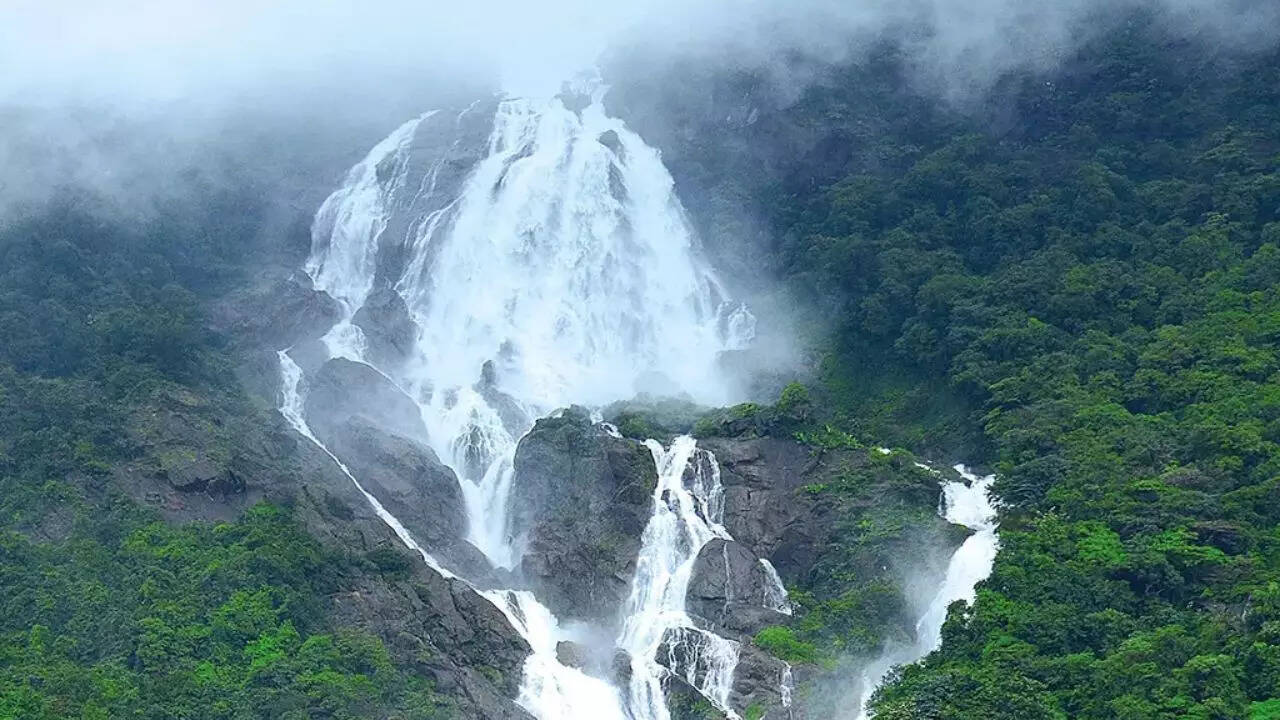
Height: 310 metres (1,017 feet)
River: Mandovi (Mahadayi)
Best Visiting Months: July to September
The name Dudhsagar means “Sea of Milk,” and the first time you see it, the name makes perfect sense. This four-tiered waterfall tumbles down the slopes of the Western Ghats in milky-white sheets, looking exactly like milk pouring down the side of a mountain.
Dudhsagar is one of the best waterfalls in India in monsoon and sits near the Goa-Karnataka border inside the Bhagwan Mahaveer Sanctuary and Mollem National Park. During the monsoon, the Mandovi River overflows, and the falls reach their full force. The surrounding jungle turns impossibly green, making the white water stand out even more.
Visitors can spot the waterfall from the Dudhsagar railway station as the train passes directly in front of it. You can also trek through the jungle on the Kuveshi-Dudhsagar route, which adds an adventure element to the visit.
Nearby Attractions: Spice plantations, Mollem National Park jungle safari How to Reach: Nearest railway station is Dudhsagar; taxis and jeep safaris available from Collem
Tip: The road to the falls closes during peak monsoon due to flooding. Always check access conditions before you go.
2. Jog Falls, Karnataka

Height: 253 metres (829 feet)
River: Sharavathi
Best Visiting Months: August to October
Jog Falls is India’s tallest unbroken waterfall and one of the most iconic natural wonders in the country. It sits in the Sharavathi Valley in the Shimoga district of Karnataka. The falls split into four distinct streams named Raja, Rani, Roarer, and Rocket. Each stream has its own character, but when all four come to life during monsoon, the combined spectacle is unforgettable.
The monsoon months are absolutely the best time to witness Jog Falls at full power. The Sharavathi River swells to capacity, and the volume of water crashing down creates a mist-filled atmosphere around the entire valley. Early morning visits are especially rewarding, as the light catches the spray and sometimes produces a rainbow.
Nearby Attractions: Sharavathi Wildlife Sanctuary, Linganamakki Dam How to Reach: From Bangalore, it is approximately 400 km; the nearest town is Sagara
Tip: Visibility can drop sharply during peak monsoon due to dense fog. Visit early in the morning for the clearest view.
3. Nohkalikai Falls, Meghalaya
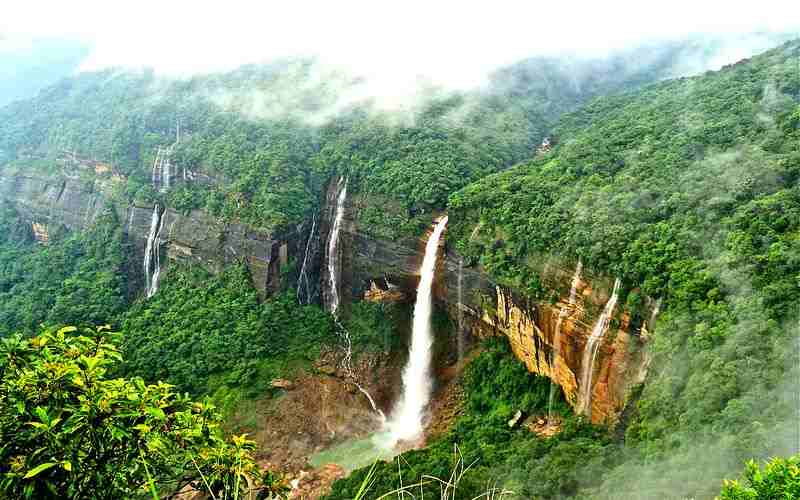
Height: 340 metres (1,115 feet)
Type: Tallest plunge waterfall in India
Best Visiting Months: June to September
If there is one waterfall on this list that will stop you in your tracks, it is Nohkalikai Falls. Located near Cherrapunji in the East Khasi Hills district, this is the tallest plunge waterfall in India. Cherrapunji is already one of the wettest places on Earth, and during monsoon, the rainfall here is extraordinary.
The waterfall drops from a sheer cliff and creates a stunning emerald pool at the bottom. During monsoon, the water flow increases by up to 20 times compared to the dry season. The pool at the base shifts from blue to bright green during the rainy months, creating a jewel-like effect against the rocky terrain.
The falls carry a local legend connected to a woman named Ka Likai, which gives the place a haunting beauty that goes beyond the physical scenery.
Nearby Attractions: Seven Sisters Falls, Mawsmai Cave, living root bridges of Cherrapunji How to Reach: Viewpoint is 4.4 km from Cherrapunji market; local taxis are available
Tip: Arrive in the morning when clouds are less likely to obscure the view.
4. Athirappilly Falls, Kerala
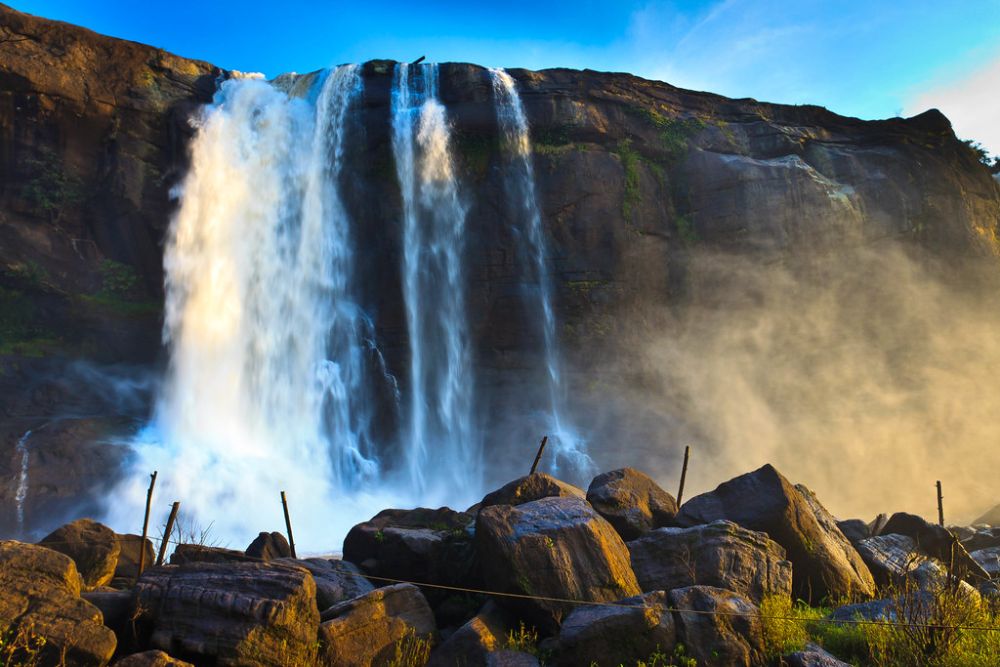
Height: 25 metres (82 feet) |
Width: 100 metres (330 feet)
River: Chalakudy Best
Visiting Months: June to September
Called the Niagara of South India, Athirappilly Falls is Kerala’s most famous and largest waterfall. It sits in the Thrissur district at the entrance to the Sholayar ranges of the Western Ghats. During monsoon, the Chalakudy River runs at full capacity, and the falls spread across their full 330-foot width, creating an enormous curtain of white water crashing into the river below.
The surrounding forest is dense and home to elephants, hornbills, leopards, and dozens of rare bird species. It is a favourite location for filmmakers, and many popular Indian films have been shot here. Visitors can walk close to the base during safer conditions for a direct experience of the falls’ force.
Nearby Attractions: Vazhachal Falls (just a short drive away), Sholayar Rainforest, Periyar Wildlife Sanctuary How to Reach: Nearest railway station is Chalakudy, about 32 km away; taxis and buses are available
Tip: The paths to the base become slippery during heavy rain. Wear non-slip footwear and stay on marked paths.
5. Chitrakote Falls, Chhattisgarh

Height: 29 metres (95 feet) |
Width: Up to 300 metres
River: Indravati
Best Visiting Months: July to October
Chitrakote Falls is the widest waterfall in India. It sits in the Bastar district of Chhattisgarh, about 38 km west of Jagdalpur. Its horseshoe shape has earned it the nickname “Niagara Falls of India.” In summer, the falls split into three separate streams. But in monsoon, the Indravati River fills to its banks and the falls merge into a single, colossal cascade that stretches across its full width.
This is among the top 10 best waterfalls in India for anyone visiting Central India. The surrounding area is home to indigenous Bastar tribal communities, and you can explore local handicrafts and culture nearby.
Nearby Attractions: Tirathgarh Falls, Bastar tribal markets, Danteshwari Temple (about 30 km away) How to Reach: Nearest railway station is Jagdalpur, 38 km away; shared taxis and buses connect the route
Tip: Roads to the falls can become difficult to navigate during very heavy rains. Check conditions in advance.
6. Kunchikal Falls, Karnataka

Height: 455 metres (1,493 feet)
River: Varahi
Best Visiting Months: Monsoon season only (July to September)
Kunchikal Falls holds the title of the highest waterfall in India. It is located near the Masthikatte area on the Shimoga-Udupi border in Karnataka. At 1,493 feet, it also ranks 267th among the world’s highest waterfalls. What makes Kunchikal unique is that it can only be seen during the monsoon season. Outside of the rainy months, the Varahi River carries very little water, and the falls nearly disappear.
The falls descend through rocky boulders in multiple levels, and the view from the Hulikal Ghati is particularly dramatic. The nearby Hulikal Ghati Temple adds a spiritual dimension to the visit.
Nearby Attractions: Hulikal Ghati Temple, Agumbe Rainforest How to Reach: Accessible from Shimoga via road; nearest town is Masthikatte
Tip: This waterfall is only accessible and visible during monsoon. Plan specifically for this window.
7. Seven Sisters Falls, Meghalaya

Height: 315 metres (1,033 feet)
Best Visiting Months: June to September
The Seven Sisters Falls, also known as Nohsngithiang Falls, sits near Cherrapunji in Meghalaya. As the name suggests, it actually consists of seven separate streams that cascade down a sheer limestone cliff side by side. During the dry season, only some of the seven streams are visible. During the monsoon, all seven come to life simultaneously, creating one of the most dramatic natural displays in Northeast India.
The viewpoint offers sweeping views of the streams falling against a backdrop of deep green hills. It is a paradise for landscape photographers.
Nearby Attractions: Nohkalikai Falls, Mawsmai Cave, Dawki River. How to Reach: Located close to Cherrapunji town; easily accessible by road
Tip: Be patient if clouds cover the hilltop. Clear patches between cloud cover can reveal all seven falls at once for a short, stunning window.
8. Shivanasamudra Falls, Karnataka

Height: Varies by stream
River: Cauvery
Best Visiting Months: July to October
Shivanasamudra is a twin waterfall formed where the Cauvery River splits into two streams. These two parts are named Gaganachukki and Bharachukki. During the monsoon season, the water flows with incredible force, filling the air with mist and creating a dramatic scene of churning white water against dark, wet rock. The surrounding area is covered in thick green vegetation, adding to the visual depth of the falls.
The Cauvery Wildlife Sanctuary nearby is home to elephants, leopards, and a wide variety of birds.
Nearby Attractions: Ranganathaswamy Temple, Cauvery Wildlife Sanctuary. How to Reach: Around 130 km from Bangalore; taxis and private vehicles are the most convenient option
Tip: Visit during the morning for the best light and cleaner mist-free air.
9. Barehipani Falls, Odisha

Height: 399 metres (1,309 feet)
River: Budhabalanga
Best Visiting Months: July to September
Barehipani is the second-highest waterfall in India. It sits inside the Simlipal National Park in Odisha. The falls descend in two tiers through thick forest, and the surrounding wildlife sanctuary adds an element of wilderness that most waterfall destinations lack. Visitors stand a real chance of spotting tigers, elephants, and various species of deer in the forest around the falls.
It is one of the lesser-visited spots among the best waterfalls in India, which means you get a more private experience with fewer crowds.
Nearby Attractions: Joranda Falls (also inside Simlipal), Barehipani viewpoints, and Deogarh How to Reach: The nearest railway station is Baripada; permits are required to enter Simlipal National Park
Tip: Obtain entry permits well in advance, as the national park controls visitor numbers strictly.
10. Tiger Falls, Uttarakhand

Height: 95 metres (312 feet)
Best Visiting Months: July to September
Tiger Falls sits inside the dense forests of Chakrata in Uttarakhand. It is one of the tallest direct waterfalls in Asia, dropping in a single stream from a height of 312 feet. The trek to reach it passes through thick oak and rhododendron forest and takes about an hour. The trail itself is a rewarding journey, with the sound of the falls growing louder as you approach.
During the monsoon, the volume of water increases significantly, and the forest around the falls turns a rich green. The remote location and the trek required to reach it make Tiger Falls feel like a genuine discovery.
Nearby Attractions: Chakrata town, Deoban Forest How to Reach: From Dehradun, it is about 100 km; Chakrata is the nearest town
Tip: Carry rainwear and sturdy footwear. The trail gets muddy during heavy rain.
11. Abbey Falls, Coorg (Kodagu), Karnataka
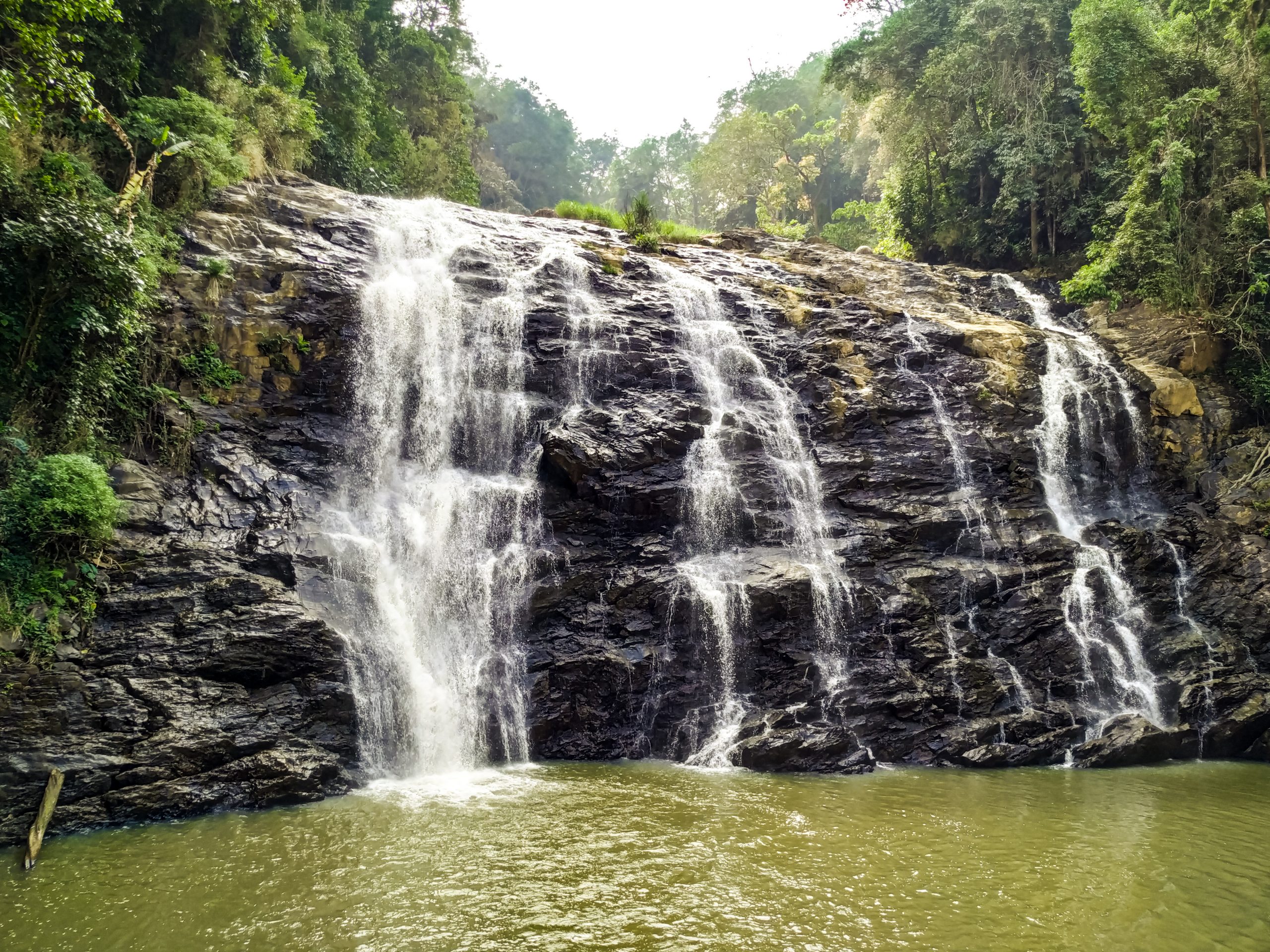
Height: Approximately 70 feet
River: Kaveri tributaries
Best Visiting Months: June to October
Coorg, often called the Scotland of India, is itself a stunning destination during monsoon. Abbey Falls sits just outside Madikeri town, surrounded by coffee and spice plantations. The falls drop through a narrow gorge flanked by overhanging trees and ferns, creating a naturally enclosed, green space that feels peaceful even when the water is running high.
The short walk from the parking area to the viewpoint passes through plantation land. You will often catch the scent of coffee and cardamom in the air.
Nearby Attractions: Iruppu Falls, Raja’s Seat, coffee plantation tours How to Reach: 7 km from Madikeri; local autos and taxis are available
Tip: Visit on a weekday to avoid weekend crowds from Bangalore and Mysore.
12. Bhagsu Falls, Himachal Pradesh
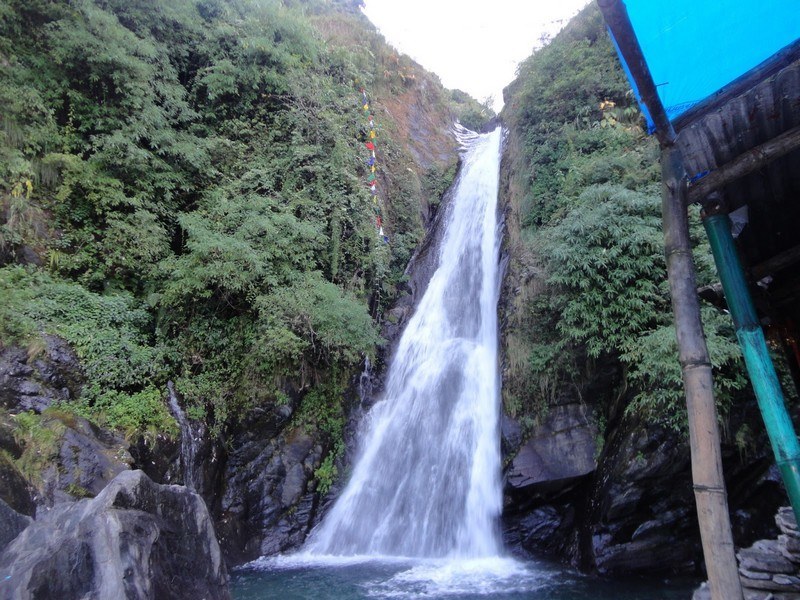
Height: Approximately 9 metres (30 feet)
Best Visiting Months: July to September
Bhagsu Falls is a compact but charming waterfall in McLeodganj, near Dharamshala. It sits at the base of the Dhauladhar Range and is closely connected to the Bhagsunath Temple nearby. The trek to the falls is short and pleasant, passing through dense forest that turns lush during the monsoon.
The area around Bhagsu has a distinct Tibetan cultural influence, with food options including momos, thukpa, and the famous Bhagsu cake available at small stalls along the path.
Nearby Attractions: Bhagsunath Temple, McLeodganj market, Dharamshala. How to Reach: Located on the main road between McLeodganj and Dharamshala; the walk from McLeodganj takes about 30 minutes
Tip: Start early in the morning before the trail gets crowded with tourists.
Safety Tips for Visiting the Best Waterfalls in India in Monsoon
Visiting the best waterfalls in India during monsoon is an extraordinary experience, but it comes with real risks that every traveller must respect. Here are the most important things to keep in mind.
Stay back from edges. The rocks near waterfall edges become extremely slippery when wet. A single misstep near the edge can be fatal. Always obey barrier signs and stay on designated viewing areas.
Do not swim during peak monsoon. The water flow during monsoon can be four to twenty times stronger than usual. Hidden currents and submerged rocks make swimming highly dangerous, even in areas that seem calm on the surface.
Wear footwear with grip. Flip-flops and smooth-soled shoes are a hazard near any waterfall. Wear sturdy shoes or trekking sandals with textured soles.
Check road conditions before you travel. Many waterfall access roads in India pass through low-lying areas that flood during heavy rain. Check local weather updates and road conditions before you leave.
Keep children close. Keep young children within arm’s reach at all times, especially near viewing platforms and rocky edges.
Do not ignore local warnings. Local authorities often put up restrictions during extreme rainfall. Always follow these instructions. The waterfall will be there again tomorrow; your safety is not negotiable.
What to Pack When Visiting the Best Waterfalls in India?
Packing right separates a great monsoon waterfall visit from a miserable one.
A waterproof jacket or poncho is essential. Even if you are not inside the waterfall’s spray, rain can arrive without warning during the monsoon. A dry bag or waterproof pouch will protect your phone and wallet. Carry extra dry clothing in a zip-lock bag inside your backpack. Anti-skid footwear, as mentioned above, is non-negotiable.
Carry water and light snacks, especially for falls that require a trek. Many remote waterfall locations have no food stalls. A small first-aid kit with antiseptic and bandages is a sensible addition for any outdoor trip.
Plan Your Monsoon Waterfall Trip with Sunraj Travels
Reaching many of these waterfalls can be logistically challenging, especially during the monsoon when roads are unpredictable and public transport schedules change frequently. A well-planned tour makes the experience far more enjoyable.
Sunraj Travels offers customised travel packages across India, including monsoon tour options that cover the best waterfall destinations. Whether you are planning a weekend trip to Coorg, a long-haul journey to Meghalaya, or a road trip across Karnataka’s waterfall circuit, Sunraj Travels can help you put together a safe and well-organised itinerary.
Their team has on-ground experience with monsoon travel conditions, which means your hotel bookings, transport arrangements, and sightseeing plans are made with the season’s unpredictability in mind.
Frequently Asked Questions
Which is the best waterfall in India to visit in monsoon?
Dudhsagar Falls in Goa and Nohkalikai Falls in Meghalaya are consistently ranked among the best waterfalls in India in monsoon. Jog Falls in Karnataka is another top choice, particularly for its sheer scale and the dramatic mist it produces during the rainy season.
What is the best time to visit waterfalls in India during monsoon?
July and August are peak months for most waterfalls. September is also excellent, and some falls in Meghalaya and Kerala remain impressive through October.
Are waterfalls safe to visit during monsoon?
Yes, they are safe if you follow safety guidelines. Stay behind barriers, avoid swimming in fast-flowing water, wear grip footwear, and never ignore local warning signs.
Which is the highest waterfall in India?
Kunchikal Falls in Karnataka, at 1,493 feet, is the highest waterfall in India. Nohkalikai Falls in Meghalaya, at 1,115 feet, is the tallest single-plunge waterfall in the country.
Which is the widest waterfall in India?
Chitrakote Falls in Chhattisgarh is the widest waterfall in India, with a width of up to 300 metres during the monsoon season.
Is Dudhsagar Falls accessible in monsoon?
The trek and jeep safari route to Dudhsagar Falls is often closed during peak monsoon due to flooding. Visitors can view the falls from the Dudhsagar railway station via train. Always confirm access conditions before your visit.
Which state in India has the most waterfalls?
Karnataka is home to a large number of waterfalls, including Jog Falls, Kunchikal Falls, Shivanasamudra Falls, and Abbey Falls, making it one of the best states for a waterfall-focused road trip during monsoon.
Conclusion
The best waterfalls in India in monsoon are not just natural attractions. They are experiences that stay with you long after the trip ends. The roar of the water, the mist on your face, the vivid green of a rain-soaked forest. These are the kinds of memories that keep calling you back.
Whether you choose the iconic Dudhsagar, the towering Nohkalikai, the wide and powerful Chitrakote, or the culturally rich Bhagsu Falls in the Himalayas, you are guaranteed an unforgettable experience. The best waterfalls in India truly shine during the rainy season. Their waterfall season is short, usually just four months. Make this the year you finally visit the best waterfalls in India instead of simply reading about them.
Start planning now, stay safe on your trip, and let the monsoon take you somewhere extraordinary.
Looking to plan a waterfall trip this monsoon? Visit Sunraj Travels to explore curated travel packages across India’s most stunning destinations.